Is there a vet app that translates for clients during the exam?
Yes. Vetinuity translates the conversation live, both directions, while you and the client are in the room.
 VETINUITY
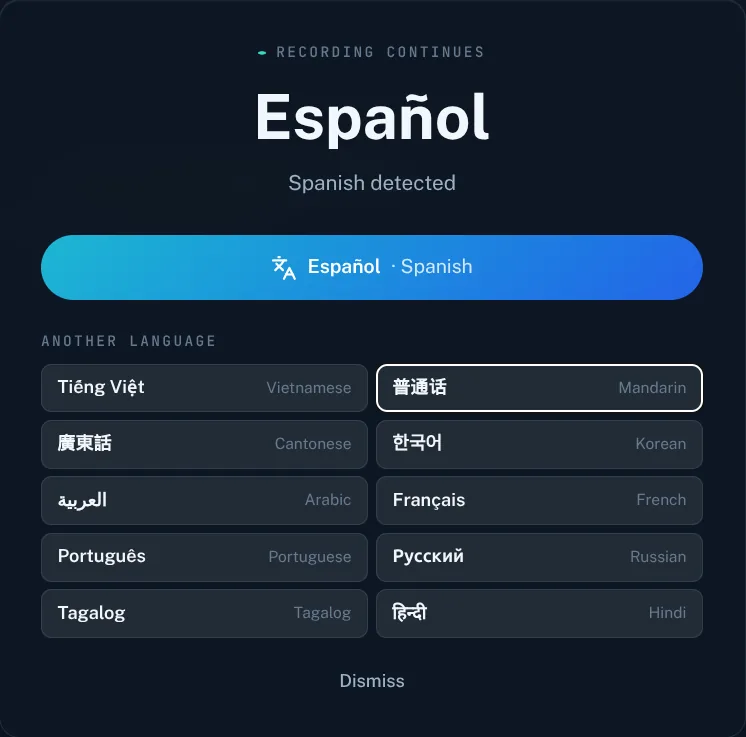
Vetinuity detects the client's language automatically and translates the exam live in both directions, across 80+ languages, then writes the SOAP note and a client summary from that same conversation.
A client carries in a male cat who has been straining in the litter box since last night. You feel the bladder and you know what is wrong before she says a word. The trouble is that she does not speak English, and you have no idea which language she does speak.
You start recording and talk the way you always do. Vetinuity detects her language from what she says and translates the exam live, in both directions: your explanation of the urethral obstruction reaches her in her language, and her questions reach you in English. When she asks whether the cat will need surgery and what to expect overnight, you hear the question as she asks it and she hears your answer the same way. You go back and forth normally. When the visit ends, the notes come from that conversation.
Nobody waited on hold for a phone interpreter, nobody relied on gestures, and the cat went back for treatment with an owner who understood why.
The veterinarian does not need to know the client's language. Vetinuity listens and detects it automatically across 80+ languages, including Spanish, Mandarin, Hindi and Polish, and translates both directions from there.
That matters because the hard cases are not the ones where you already know the client speaks Spanish. They are the ones where someone walks in and you cannot tell. Detection turns that visit into the same conversation you would have with anyone else. The clinic does not need to plan for which languages its clients speak or keep a list of who on staff speaks what.
The SOAP note and a client summary are both written from the conversation you just had. You do not repeat the history in English for the chart afterward, and you do not dictate a second version. The same words that crossed the language gap become the medical record.
The summary gives the client something to keep from the visit, and the note lands in your format, ready to sign.
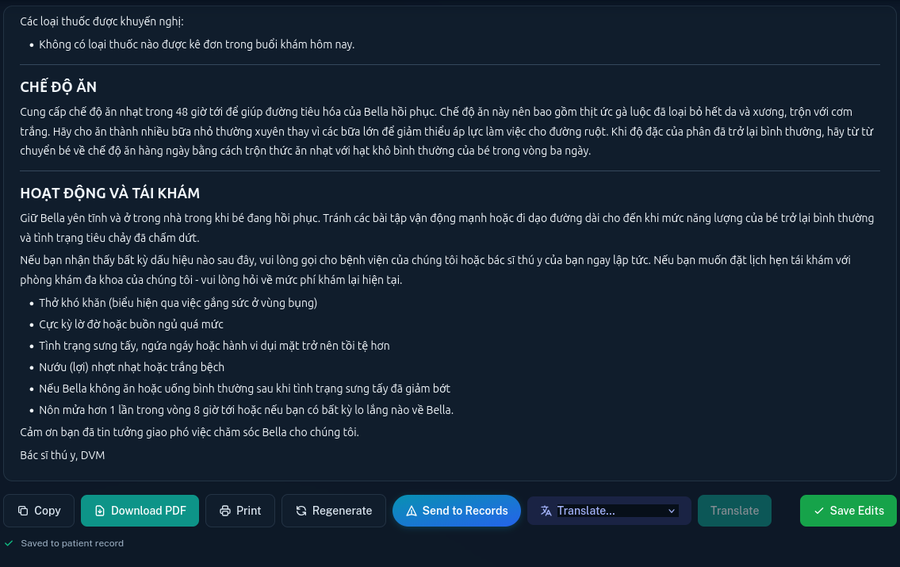
Discharge instructions are generated from the visit and can go home in the client's language: medications, feeding, activity, and the warning signs that should bring the pet back. Instructions a client cannot read are the ones that get set aside at home.
To see how translated discharge instructions read, the free discharge translator translates instructions you already have, no account needed.
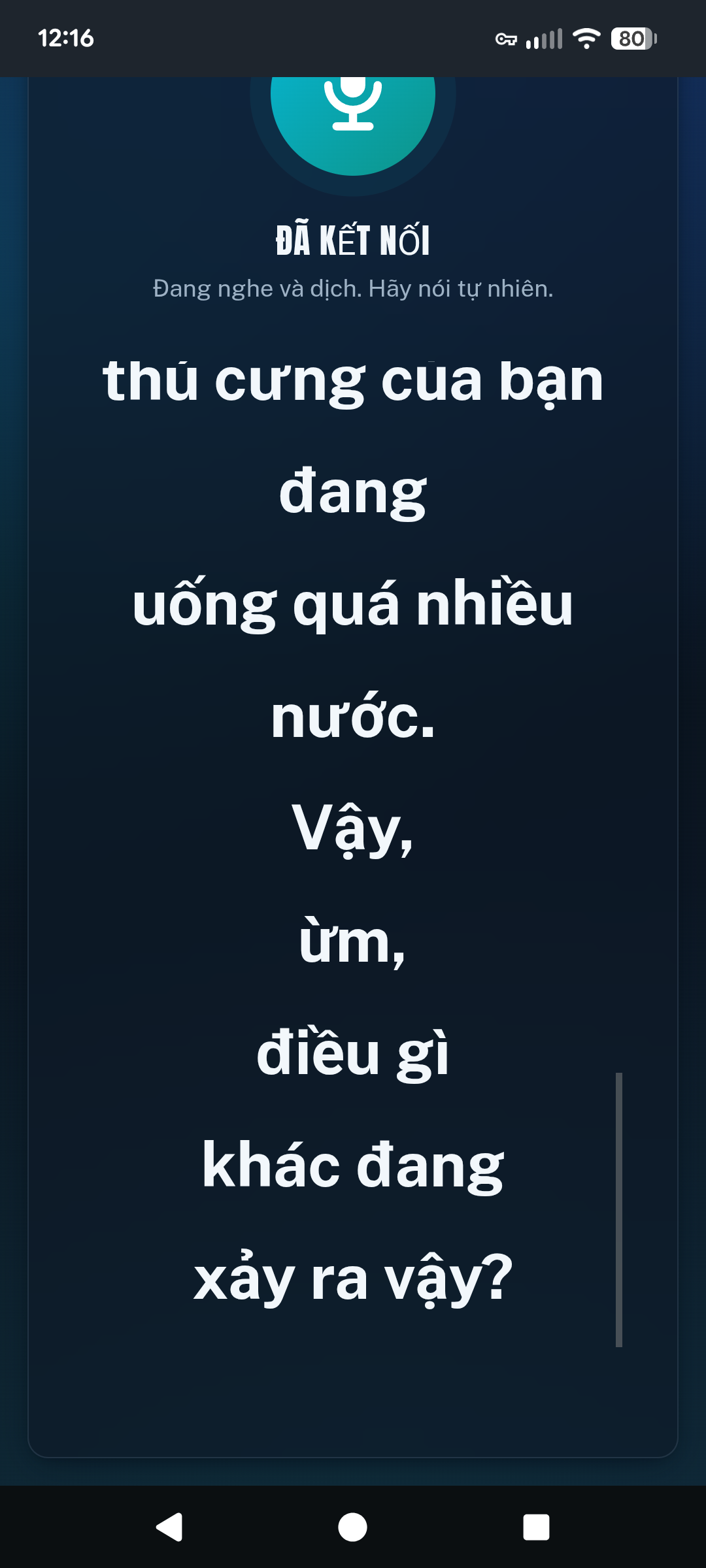
From the client's side, the visit feels like a conversation, not a procedure. She talks to you, not to a phone line or a relative standing in as interpreter, and she hears your explanation in her own language as you give it. She can ask the questions people usually hold back when they are struggling to be understood: how serious is this, what happens next, what should I watch for tonight.
That changes what you can do in the room. Consent conversations are clearer, histories are fuller, and the owner leaves with a plan she understood rather than one she nodded along to.
Everyone else in the room can follow too, including the technician restraining the patient, because the conversation is no longer split between two people who understand each other and one who does not.
Spanish is the most common case in many clinics, and it is where most teams first notice the difference. It is not the limit. The same detection and translation work for Mandarin, Vietnamese, Arabic, Hindi, Polish, Tagalog and the rest of the 80+ languages, with no setup for each one.
That breadth matters most for the languages nobody planned for. A clinic can usually find someone who speaks some Spanish. Finding someone who speaks Amharic, Khmer or Ukrainian at the moment a client walks in is another matter, and those are exactly the visits where a misunderstanding is most likely and most costly for the patient.
It also matters for the veterinarian who works in more than one place. The client mix changes from clinic to clinic and shift to shift, and the tool does not need to know in advance which languages a given day will bring.
Live translation has been in production in Vetinuity since July 2026. It is not a beta and not a preview.
For a side-by-side look at how live translation differs from tools that translate the note after the visit, see the live translation comparison.
Yes. Vetinuity translates the conversation live, both directions, while you and the client are in the room.
Yes, automatically, across 80+ languages.
80+ languages, including Spanish, Mandarin, Hindi and Polish.
Yes, along with a client summary.
Yes.
$99 a month per veterinarian.